
Loading...
Edge helps businesses deliver exceptional customer experiences through professional customer support outsourcing that scales with demand.

Customer expectations have never been higher. They want instant responses across multiple channels, 24/7 availability, personalized service, and solutions delivered on the first contact. Meeting these demands with internal teams requires massive investment in hiring, training, technology, and infrastructure that stretches budgets and diverts focus from core business priorities.
Edge helps businesses deliver exceptional customer experiences through professional customer support outsourcing that scales with demand, maintains quality standards, and costs significantly less than building internal teams. If you're struggling to meet customer service expectations, experiencing high support costs, or lacking capacity for round-the-clock coverage, outsourcing provides a strategic solution that transforms customer support from expense into a competitive advantage.
Customer support outsourcing involves partnering with specialized providers who handle customer interactions on your behalf. Instead of building and managing internal support teams, you work with trained professionals who respond to inquiries, resolve issues, process requests, and deliver service that meets your brand standards across phone, email, chat, and social media channels.
This strategic approach allows businesses to focus resources on product development, marketing, and growth initiatives while ensuring customers receive excellent support from specialists who dedicate their careers to customer service excellence. Outsourcing doesn't mean losing control; it means gaining access to expertise, technology, and scalability that internal teams struggle to match.
Successful businesses outsource customer service by selecting partners who understand their brand, invest in comprehensive training, maintain quality standards through rigorous monitoring, and communicate transparently about performance. The relationship functions as an extension of internal teams rather than a distant vendor arrangement.
The decision to outsource typically follows growth phases where internal teams can't keep pace with demand, seasonal fluctuations that make staffing challenging, geographic expansion requiring multilingual support, or recognition that customer service expertise isn't core competency requiring internal development.
The financial advantages of customer care outsourcing extend far beyond simple labor arbitrage. When you build internal support teams, fixed costs include salaries, benefits, office space, equipment, software licenses, training programs, and management overhead. These expenses persist regardless of call volume fluctuations or business cycles.
Outsourcing converts fixed costs to variable expenses aligned with actual support demand. You pay for services delivered rather than maintaining excess capacity during slow periods or scrambling to hire during peak seasons. This flexibility improves financial efficiency while ensuring adequate coverage year-round.
Cost savings typically range from 30-60% compared to equivalent internal operations. Beyond direct labor savings, you eliminate recruitment expenses, reduce training costs, avoid technology investments, and free management time for strategic priorities rather than operational firefighting.
Operational flexibility allows for rapid scaling, impossible with internal teams. Need 50 additional agents for the holiday season? Outsourcing partners deploy capacity within days or weeks rather than the months required for internal hiring, training, and onboarding. This agility prevents service degradation during critical periods.
Understanding the benefits of outsourcing helps businesses recognize how strategic partnerships deliver advantages that internal operations cannot match efficiently.
Global customers expect support whenever they need it, regardless of time zones or local business hours. Providing 24/7 coverage with internal teams requires multiple shifts, substantial payroll, and complex scheduling that small to mid-sized businesses find prohibitively expensive.
Customer service outsourcing service providers operate across global locations, offering round-the-clock coverage at a fraction of the cost that internal 24/7 operations require. This enables businesses of any size to compete with larger enterprises on customer service availability.
Multilingual support expands market reach without the challenge of hiring, training, and retaining native speakers across dozens of languages. Outsourcing partners employ multilingual agents serving diverse customer bases, breaking down language barriers that limit growth in international markets.
Geographic distribution also provides business continuity advantages. When natural disasters, infrastructure failures, or local emergencies disrupt one location, operations shift seamlessly to other facilities, maintaining service continuity that single-location internal teams cannot guarantee.
Dedicated team models assign specific agents exclusively to your account. These specialists immerse themselves deeply in your products, policies, and brand voice, functioning essentially as remote employees who happen to work for outsourcing providers rather than directly for you.
This model delivers the highest quality and brand consistency because agents develop expertise through exclusive focus on your business. Customers receive support from familiar voices who recognize returning contacts and maintain conversation continuity across multiple interactions.
Dedicated teams suit businesses requiring specialized knowledge, complex products, high-value customers, or strong brand identity, where generic support would damage reputation. The model costs more than shared arrangements but delivers superior results when customization and expertise matter most.
Shared agent models distribute multiple clients across agent pools, optimizing utilization and reducing costs. Agents handle diverse accounts within their shifts, switching between different companies, products, and support scenarios throughout days.
This approach works well for straightforward support needs, basic inquiries, simple troubleshooting, order status checks, and routine transactions that don't require deep product expertise or complex decision-making. Lower costs make shared models attractive for businesses prioritizing affordability over specialization.
Quality control becomes more important in shared environments since agents split attention across multiple brands. Strong training, clear documentation, and effective knowledge bases ensure agents deliver acceptable service despite a less specialized focus than dedicated teams provide.
Modern customer care outsourcing embraces omnichannel approaches where customers engage seamlessly across phone, email, live chat, social media, SMS, and messaging apps. Support agents access unified platforms showing complete conversation history regardless of channel, preventing frustrating repetition that customers hate.
Omnichannel outsourcing requires sophisticated technology integrating all communication channels into a single interface where agents view complete customer context, switch channels mid-conversation, and maintain consistency across every touchpoint. This technology investment represents another area where outsourcing provides access to capabilities internal teams struggle to build.
Channel preferences vary by customer demographics and situations. Younger customers prefer chat and messaging, urgent issues drive phone calls, complex questions suit email, and public complaints happen on social media. Omnichannel support meets customers where they are rather than forcing them into limited contact options.
Similar to how customer care outsourcing provides comprehensive support solutions, omnichannel approaches ensure customers receive consistent, convenient service regardless of how they choose to connect.
Response speed directly impacts customer satisfaction. When customers wait hours or days for replies, frustration builds, and negative perceptions form, regardless of eventual solution quality. Professional outsourcing delivers faster responses through dedicated resources, optimized workflows, and appropriate staffing levels.
Outsourcing partners typically maintain service level agreements guaranteeing response times, often 2-6 hours for email, under 60 seconds for phone, and under 2 minutes for chat. These commitments ensure consistent performance that overwhelmed internal teams struggle to maintain during busy periods.
Specialized training also optimizes resolution. Experienced support professionals recognize common issues quickly, apply proven solutions confidently, and escalate appropriately when situations exceed their expertise. This efficiency reduces customer effort and improves first-contact resolution rates.
Quality customer support builds loyalty that drives retention and lifetime value. When customers receive helpful, empathetic, professional service consistently, they develop positive brand associations that withstand occasional product issues or competitive pressures.
Professional outsourcing providers invest heavily in quality assurance, monitoring calls, scoring interactions, providing coaching, and continuously improving performance. This systematic approach to quality often exceeds what internal teams achieve without specialized customer service expertise and dedicated quality programs.
Data-driven optimization identifies improvement opportunities. Outsourcing partners analyze interaction patterns, track satisfaction scores, identify common complaints, and implement changes that enhance customer experience continuously. These insights also inform product development, marketing messaging, and operational improvements across your business.
Just as outsource data management services brings specialized data expertise, customer support outsourcing brings specialized service expertise that elevates customer experiences systematically.
E-commerce businesses handle high volumes of routine inquiries, order status, shipping questions, return requests, and product information, which outsourcing manages efficiently. Seasonal spikes during holidays create capacity challenges that flexible outsourcing solves without permanent staffing increases.
Retail support requires product knowledge, order processing capability, and problem-solving skills that professional agents develop through experience across multiple retail clients. This cross-industry learning benefits your business through best practices and proven approaches.
Software and technology companies need technical support to help customers troubleshoot issues, optimize usage, and maximize product value. Many outsourcing providers specialize in technical support, employing agents with IT backgrounds and technical aptitude who learn complex products quickly.
Tiered support models work well for technology, outsourcing handles tier 1 inquiries and basic troubleshooting, while escalating complex issues to internal technical experts. This division optimizes resources and costs while ensuring customers receive appropriate expertise for their specific situations.
Healthcare providers face unique challenges, including HIPAA compliance, medical terminology, empathetic communication with anxious patients, and appointment scheduling complexity. Specialized healthcare outsourcing partners understand these requirements and maintain compliant operations that protect patient privacy.
Financial services require similar specialization, regulatory compliance, fraud prevention, sensitive financial discussions, and security protocols that prevent unauthorized access. Outsourcing partners serving financial industries invest in appropriate training, technology, and security measures that meet stringent requirements.
Similar to how data entry outsourcing handles specialized data processing, industry-specific customer support outsourcing addresses unique sector requirements professionally and compliantly.
Selecting outsourcing partners requires evaluating multiple critical factors. Industry experience demonstrates understanding of your specific challenges, terminology, and customer expectations. Verify partners have served similar businesses successfully through references and case studies.
Quality assurance programs separate professional providers from commodity vendors. Ask about monitoring processes, quality scoring systems, agent coaching programs, and continuous improvement initiatives that ensure consistent performance meeting your standards.
Technology capabilities enable effective support delivery. Modern platforms integrate with your existing systems, provide real-time reporting, support omnichannel communication, and offer analytics that inform optimization decisions.
Cultural alignment ensures smooth collaboration. Partners should understand your brand values, communication style, and customer service philosophy. Misalignment creates friction that damages customer relationships regardless of operational competence.
Pricing transparency prevents surprises. Understand all costs, including setup fees, minimum commitments, per-contact pricing, and charges for additional services. Compare total costs rather than focusing solely on attractive base rates that hide expensive add-ons.
Artificial intelligence increasingly augments human agents through chatbots handling routine inquiries, AI suggesting responses during live interactions, and automation managing simple transactions. Forward-thinking outsourcing partners embrace these technologies, improving efficiency while maintaining human touch where it matters most.
Predictive analytics anticipate customer needs before they contact support, enabling proactive outreach that prevents issues and delights customers. Outsourcing providers investing in analytics deliver strategic value beyond reactive problem-solving.
Remote work models expand talent pools globally, enabling outsourcing partners to recruit exceptional agents regardless of geographic location. This distributed approach improves service quality while maintaining cost advantages that make outsourcing attractive.
Personalization at scale becomes possible through data integration, AI insights, and sophisticated CRM systems that provide agents with complete customer context instantly. Future customer support feels personal despite massive operational scale.
Exceptional customer support shouldn't require building expensive internal infrastructure or compromising service quality during growth. Professional customer support outsourcing delivers scalable, cost-effective solutions that meet modern customer expectations while freeing your team to focus on core business priorities. Edge provides comprehensive customer service outsourcing that combines trained specialists, advanced technology, and proven processes, delivering experiences that build loyalty and drive growth. Ready to transform your customer support from a cost center into a competitive advantage?
Visit Edge today and discover how our customized outsourcing solutions can elevate your customer experience while optimizing costs and operational efficiency.

Transform your customer experience with expert, round-the-clock technical support.

Unlock the power of your information with professional, scalable data solutions.
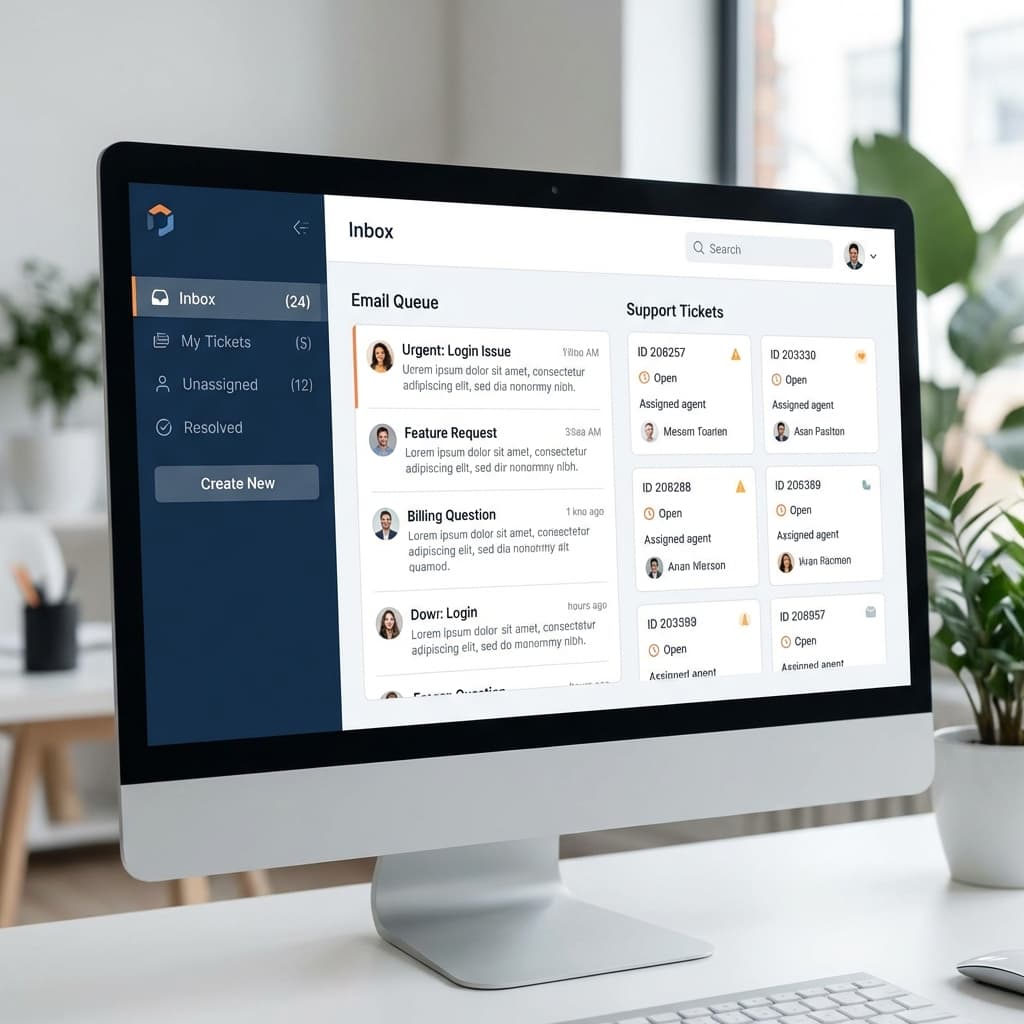
Transform your inbox into a growth engine with professional email management.