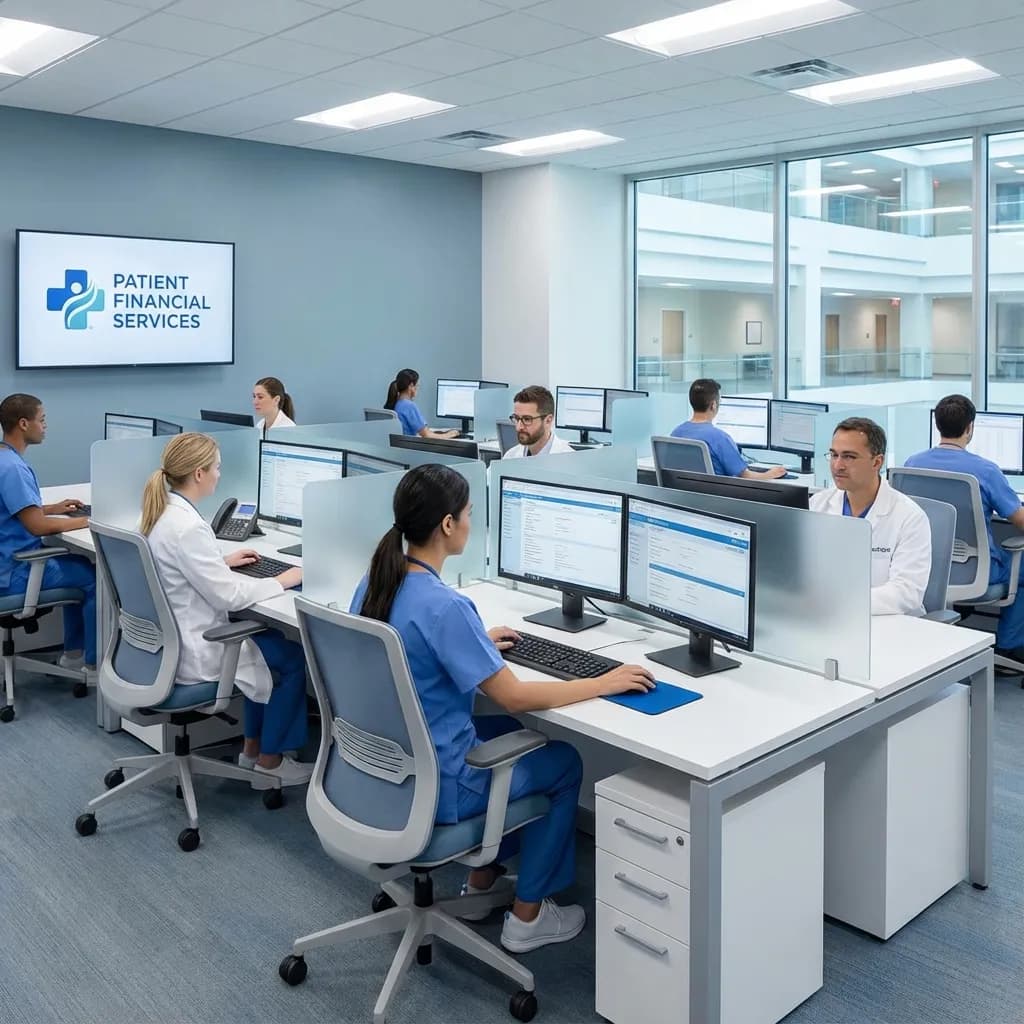
Running a medical practice means caring for patients, not wrestling with claim denials, coding updates, and insurance company bureaucracy. Yet many healthcare providers find themselves buried in billing paperwork, watching revenue slip through the cracks while staff burnout increases. That's exactly why smart practices are choosing to outsource medical billing services, and partnering with experts like Edge can transform your revenue cycle while letting you focus on what matters most: patient care.
Medical billing has become incredibly complex. Between ICD-10 codes, constantly changing insurance requirements, prior authorization headaches, and compliance regulations, it's a full-time specialty that pulls resources away from clinical operations. When you outsource medical billing, you're not just delegating a task you're gaining a strategic partner who lives and breathes medical billing excellence every single day.
- The healthcare landscape has changed dramatically. Reimbursement rates are tighter, regulations multiply annually, and claim denials cost practices thousands in lost revenue and staff time. Managing this complexity in-house means hiring specialized billing staff, investing in expensive software, staying current with coding changes, and constantly training your team.
- Medical billing outsourcing companies offer a compelling alternative. These specialists handle thousands of claims daily across multiple specialties and payers. They know exactly which insurance companies require specific documentation, which codes trigger audits, and how to appeal denials successfully. This expertise translates directly into faster payments and higher collection rates for your practice.
- Consider the numbers: the average medical practice loses 5-10% of potential revenue to billing errors, denied claims, and write-offs. Professional billing companies typically improve collection rates by 10-20% while reducing the time from service to payment. For a practice generating $2 million annually, that improvement could mean an additional $200,000 — $400,000 in collected revenue, without seeing a single additional patient.
- Before you dismiss outsourcing medical billing as an unnecessary expense, let's examine what in-house billing really costs your practice.
- Start with salaries and benefits for billing staff. Experienced medical billers command $40,000-$60,000 annually, plus benefits, adding another 20-30%. You'll need at least one biller per physician, often more depending on patient volume and specialty complexity.
- Technology expenses add up quickly. Practice management software, clearinghouse fees, coding reference materials, and regular updates can cost $10,000-$50,000 annually, depending on practice size. These systems require maintenance, upgrades, and technical support.
- Training represents an ongoing investment. Medical billing codes change annually, insurance requirements evolve constantly, and compliance regulations update regularly. Keeping staff current requires continuing education, conference attendance, and subscription services to coding resources.
- Lost productivity during staff turnover creates hidden costs. When a biller leaves, claim submissions slow down, follow-ups get missed, and revenue collection suffers. Recruiting, hiring, and training replacements can take months, during which your revenue cycle stutters.
- Error costs hurt most. Incorrect coding leads to claim denials. Missing documentation triggers payment delays. Compliance violations risk audits and penalties. These mistakes don't just delay revenue; they damage your practice's credibility with payers and potentially expose you to legal risk.
- Understanding the process helps you appreciate the value. When you partner with professional outsource billing companies, here's the typical workflow that protects your revenue while simplifying your operations.
- Patient encounters begin as usual in your practice. After each visit, your clinical staff documents the services provided; this part doesn't change. The difference starts when that information moves to the billing process.
- Your outsourced billing partner receives encounter information either through direct integration with your EHR system or via secure file transfer. Certified professional coders review the documentation and assign appropriate CPT, ICD-10, and modifier codes that accurately reflect the services provided and maximize legitimate reimbursement.
- Claim submission happens quickly, often within 24-48 hours of the encounter. The billing company scrubs claims through sophisticated software that catches common errors before submission, dramatically reducing rejection rates. Clean claims go to payers electronically through established clearinghouse connections.
- Active follow-up begins immediately. Unlike in-house staff who might check on claims weekly, professional billing companies track every claim daily. They know exactly when to expect payment, recognize patterns indicating problems, and proactively address issues before they become denials.
- Denial management turns potential losses into revenue. When claims are denied, experienced billers identify the root cause, gather necessary documentation, and submit appeals using language and evidence that insurance companies respond to. They understand which battles are worth fighting and how to win them.
- Patient billing and collections happen transparently. You maintain control over patient relationships while the billing company handles statements, payment processing, and, when necessary, gentle collection efforts that preserve patient satisfaction.
- Throughout this process, you receive detailed reporting showing exactly where your revenue stands, which payers are performing well, where bottlenecks exist, and how collections compare to previous periods. This visibility often exceeds what practices achieve with in-house billing.
- One of the most powerful advantages of working with medical billing outsourcing companies is access to specialized knowledge your practice couldn't afford to develop internally.
- Certified professional coders stay current with annual code updates, documentation requirements, and payer-specific rules. They attend regular training, maintain certifications, and live in the world of medical billing exclusively. This expertise means fewer claim denials, faster payments, and optimized reimbursement within compliant guidelines.
- Payer relationship management matters more than most practices realize. Experienced billing companies know the quirks of major insurance companies, which ones require specific documentation formats, which have automated systems that respond to particular approaches, and which have human reviewers who appreciate detailed explanations. This insider knowledge dramatically improves first-pass claim acceptance rates.
- Compliance expertise protects your practice. Professional billing companies maintain HIPAA compliance, understand fraud and abuse regulations, implement proper audit trails, and stay current with Medicare and Medicaid billing rules. They know how to document medical necessity, when modifier usage is appropriate, and how to structure claims that satisfy both legal requirements and reimbursement optimization.
- Specialty-specific knowledge delivers better results. Whether you're in cardiology, orthopedics, mental health, or primary care, the best billing companies understand your specialty's unique coding challenges, common denial reasons, and documentation requirements. This specialized approach outperforms generalist in-house billers who might handle multiple specialties without deep expertise in any.
- Similar to the specialized support available through Medical Transcription Outsourcing and Healthcare BPO Services, medical billing outsourcing provides access to professionals who understand healthcare's unique challenges and regulatory environment.
- Modern outsourcing medical billing isn't about sending paper superbills and waiting for checks. Today's professional billing companies leverage sophisticated technology that integrates seamlessly with your practice management and EHR systems.
- Direct EHR integration means no duplicate data entry. Patient demographics, insurance information, and encounter details flow automatically from your clinical system to the billing platform. This eliminates transcription errors and speeds up the entire revenue cycle.
- Advanced scrubbing software catches errors before claims leave your practice. These systems check for missing information, incorrect code combinations, medical necessity issues, and payer-specific requirements. Clean claims get paid faster and require far less follow-up.
- Real-time eligibility verification prevents coverage surprises. Before appointments, the billing company verifies patient insurance coverage, identifies authorization requirements, and determines patient financial responsibility. This proactive approach reduces claim denials and improves point-of-service collections.
- Automated follow-up systems track every claim from submission through payment. Rules-based workflows ensure appropriate action at each stage, whether that's checking on a claim approaching timely filing deadlines, escalating a repeated denial, or generating patient statements after insurance payment.
- Analytics and reporting provide insights you've never had before. Interactive dashboards show collection rates by provider, payer performance comparisons, aging accounts receivable, and denial trends. This intelligence helps you make better business decisions about which payers to contract with, where documentation can improve, and how to optimize your revenue cycle.
- You access all this technology without capital investment, maintenance headaches, or upgrade costs. The billing company manages the entire technology stack as part of its service.
- Let's talk about the bottom-line impact that makes outsourced billing such a compelling business decision.
- Faster claim submission accelerates payment. Professional billing companies typically submit clean claims within 24-48 hours of encounter documentation, compared to 5-10 days for many in-house billing departments. This time difference multiplies across hundreds of claims monthly, significantly improving cash flow.
- Higher first-pass acceptance rates mean fewer delays. When 95% of your claims are accepted on first submission versus 75-85% with in-house billing, you eliminate weeks of back-and-forth correspondence. Money arrives in your account faster and more predictably.
- Better denial management recovers revenue you'd otherwise lose. Professional billers appeal denials aggressively and successfully, often recovering 50-70% of initially denied claims. In-house staff, overwhelmed with daily submission tasks, rarely have time for thorough appeal work.
- Reduced accounts receivable aging keeps money flowing. With systematic follow-up on every claim, fewer charges slip into the 60-day, 90-day, or 120-day+ aging categories where collection becomes increasingly difficult. Your working capital improves as you collect faster.
- Optimized coding ensures you receive maximum appropriate reimbursement. Professional coders understand how to document and code for complexity, when evaluation and management level increases are justified, and how to legitimately maximize reimbursement without crossing into upcoding territory.
- Practices typically see days in accounts receivable drop from 45-60 days to 30-35 days after outsourcing. This acceleration alone can dramatically improve your practice's financial position without changing anything about patient volume or services provided.
- Not all medical billing outsourcing companies deliver equal value. Selecting the right partner requires careful evaluation of several critical factors.
- Specialty expertise should match your practice. A company with deep experience in your specific specialty understands the nuances of your coding, common documentation issues, and payer relationships that matter most to your revenue. Ask for references from similar practices.
- Technology capabilities must integrate with your systems. Verify that their platform works seamlessly with your EHR and practice management software. Smooth integration eliminates double data entry and ensures real-time information flow in both directions.
- Pricing models should align with your goals. Most companies charge a percentage of collections (typically 4-8%) or a flat fee per claim. Percentage-based pricing aligns the billing company's incentives with your revenue goals; they make more money only when you collect more money.
- Performance guarantees demonstrate confidence. Look for companies that guarantee specific metrics like first-pass claim acceptance rates, average days in accounts receivable, or collection rates. These commitments show they stand behind their service quality.
- Transparency and reporting keep you informed. You should receive detailed monthly reports showing submitted claims, collected revenue, denial rates, and accounts receivable aging. Real-time access to your billing data through online portals is increasingly standard and incredibly valuable.
- Compliance credentials protect your practice. Verify certifications like HIPAA compliance, AAPC or AHIMA coder credentials, and any relevant accreditations. Ask about their audit processes, security measures, and compliance training programs.
- If you're exploring comprehensive healthcare support beyond billing, solutions like Medical Scribe Outsourcing and specialized Medical Billing Outsourcing services can create synergies that transform your entire practice operation.
- Let's address the hesitations many practices have about outsourcing medical billing and separate legitimate concerns from unfounded fears.
- "Will I lose control over my revenue cycle?" Actually, most practices gain visibility and control. Professional billing companies provide detailed reporting and real-time access to your billing data. You see exactly what's happening with every claim, often with better transparency than in-house operations, where you rely on staff reports without independent verification.
- "What about patient relationships?" Your patients remain your patients. The billing company works behind the scenes on insurance claims. Patient communication, when needed, is typically handled by your front desk or can be managed by the billing company using your practice's name and following your communication preferences. Most patients never know billing is outsourced; they just notice they're getting fewer confusing bills and clearer explanations of benefits.
- "Is my data secure?" Reputable billing companies invest heavily in security, often far more than individual practices can afford. They use encrypted data transmission, secure servers, restricted access controls, comprehensive audit trails, and regular security assessments. HIPAA compliance is fundamental to their business model. Ask about specific security measures and certifications during your evaluation.
- "What if the relationship doesn't work out?" Most contracts include reasonable termination clauses. Your data remains yours and can be transitioned back in-house or to another provider. The transition process should be clearly defined in your agreement, including how long the company will support you during the changeover.
- "Will staff resist the change?" Change management matters, but most staff actually welcome relief from billing stress. Focus on how outsourcing allows them to concentrate on patient care and clinical excellence rather than wrestling with claim denials and insurance company bureaucracy. Many practices find that staff morale improves after outsourcing billing.
- Understanding what to expect when you decide to outsource medical billing services helps you plan effectively and manage expectations.
- Initial assessment and setup typically takes 2-4 weeks. The billing company analyzes your current processes, reviews your payer mix, sets up software integrations, and develops customized workflows that fit your practice patterns. You'll work together to establish fee schedules, coding guidelines, and reporting preferences.
- Staff training happens concurrently. Your clinical and front desk staff learn new workflows for capturing encounter information, verifying insurance, and handling patient billing questions. This training is usually straightforward since most of your processes remain unchanged.
- Parallel processing during the first month provides security. Many practices run both in-house and outsourced billing simultaneously for 30 days, ensuring nothing falls through the cracks during transition. This overlap catches any integration issues early while protecting your revenue.
- Full transition occurs gradually. The billing company typically assumes responsibility for new claims first, then systematically works through your existing accounts receivable. This phased approach ensures continuity and allows you to verify performance before completely letting go.
- Performance monitoring intensifies during the first 90 days. Expect weekly calls with your account manager to review metrics, address questions, and refine processes. This attention to early performance prevents small issues from becoming bigger problems.
- Most practices see positive results within 60-90 days, faster claim processing, reduced denials, and improved cash flow. Full optimization usually takes 4-6 months as the billing company learns your practice's unique characteristics and fine-tunes its approach.
- How do you know if outsourcing medical billing is working? Establish clear metrics before implementation and monitor them consistently.
- Collection rate is fundamental: what percentage of allowed charges do you actually collect? Top-performing practices collect 95-98% of allowed amounts. If you're currently at 85-90%, the improvement from outsourcing can be dramatic.
- Days in accounts receivable measure how quickly you collect. Benchmark your current performance, then track improvement. Most practices see this number drop by 10-20 days within six months of outsourcing.
- Clean claim rate shows billing quality. What percentage of claims are accepted on first submission? You should see this metric at 95% or higher with professional billing companies.
- Denial rate indicates process health. Track both the percentage of claims denied and the successful appeal rate. Both should improve significantly with outsourcing.
- Net collection cost measures total billing expense as a percentage of collections. Include all costs, staff salaries, benefits, software, supplies, and management time for in-house billing. Compare this to your outsourcing percentage. Most practices find that outsourcing costs 30-40% less than true in-house expenses.
- Staff satisfaction and productivity matter too. Survey your team about stress levels, job satisfaction, and time spent on billing versus patient care. These qualitative measures often show improvement that directly impacts patient experience and clinical quality.
Ready to transform your practice's financial performance and reclaim time for what matters most: exceptional patient care? Outsourcing medical billing services isn't just about delegating a headache; it's about partnering with specialists who can optimize your revenue cycle, improve cash flow, and reduce administrative burden while ensuring compliance and accuracy. Edge understands the unique challenges healthcare providers face and offers comprehensive medical billing solutions tailored to your specialty and practice size. Stop letting billing complexities drain your resources and compromise your revenue. Discover how professional medical billing outsourcing can increase your collections, reduce your overhead, and give you the freedom to focus on delivering outstanding patient care. Your practice deserves financial health as robust as the care you provide.
Let's make it happen together.